Joining Our Going God

I remember once visiting a historic cathedral in New York City. It was a beautiful building, full of art, statuary, and soaring architecture. It felt like a deeply sacred space. Yet as I walked through it, I felt unsettled.

Part of my discomfort came from the commercialization. Hundreds of tourists snapped selfies. Donation boxes seemed to be everywhere. Gaudy bronze penny-press machines flanked the main aisle. It felt a little like Jesus walking through the temple courts.

But at a deeper level, what unsettled me was how little impact the sacred realities that space represented seemed to be having. A few people gathered for Mass, but they kept their heads down and were ushered through gates by security while tourists wandered past. Outside, others lounged or begged for money on the cathedral steps.

Worship was still happening in that place, but it felt strangely disconnected from the world around it. Scripture was read. Psalms were recited. Yet it all seemed to exist apart from the bustling city rather than engaging it.

That image has stayed with me—not because it represented the failure of one parish in Manhattan, but because it reflected a temptation common to Christians of every tradition. We can begin to treat faith as something we gather for rather than something we are sent into. We settle for a faith without mission, a believing without going.

Where does this mindset come from? There are many possible answers, but I believe one of the deepest is a faulty vision of God Himself.

Many people imagine God as ultimately passive. Whether they think of Him as a distant cosmic force, a judge in the sky, or a kindly grandfather figure, they picture Him as largely uninvolved. He sits in heaven, while the primary movement of history is humanity reaching toward Him.

Even churches that affirm God’s activity can subtly fall into this pattern. We speak as though He has done His part and is now waiting for us to do ours. He accomplished salvation through Christ, and now He simply waits while we decide whether to embrace it, proclaim it, or obey it.

Sometimes we even tell the story of Scripture this way. Humanity rebels against God. In His grace, He provides a way back through Jesus. Then He waits on the other side of the chasm while we choose whether to cross the bridge of the cross.

But that is not the story the Bible actually tells.

From the opening chapters of Genesis, God is the One who moves first. Humanity rebels, and immediately God begins pursuing those who have run from Him. We hide, and He comes looking for us.

  • When Adam and Eve sin, God seeks them out, clothes their nakedness, and promises a Redeemer who will crush the serpent’s head.
  • When the nations are scattered at Babel, God immediately calls Abram and promises that through him all the families of the earth will be blessed.
  • When Israel is enslaved in Egypt, God does not merely unlock the prison door. He comes to deliver His people, leading them by a pillar of cloud and fire. He places His own dwelling in the midst of their camp.
  • Again and again, when Israel rebels or wanders, God moves toward them. He raises up judges. He establishes kings. He sends prophets to call His people home.
  • Then, in Jesus, God literally moves into our neighborhood. Before Christ becomes the way for us to come to God, He is Immanuel—God with us.
  • And when the church is formed, believers are sent into the world not to begin God’s work but to join it. God has already prepared a harvest among the nations. He pours out His Spirit, and the earliest Christians continually discover that He has gone before them.

Scripture is, from beginning to end, the story of a missionary God.

He is always moving toward the lost, seeking the wandering, pursuing the broken, planting, watering, preparing, and redeeming. Our calling is not to remain safely inside the house but to go into His fields and gather the harvest He is already growing.

Few truths are more empowering for our missionary calling than this one. We are not trying to persuade a reluctant God to care about the world. We are following a God who is already at work in it. If we want to experience what God is doing, we should certainly gather for worship—but we should also go where He is moving.

That calling touches every part of life. God sends us to our neighbors and coworkers, to the man who collects our trash and the woman who bags our groceries. Wherever people are, God is already pursuing them.

But there is something uniquely encouraging about seeing that same God at work in places far from home. Whether watching lives transformed in prisons, communities served in inner cities, or churches planted among unreached peoples, we are reminded that God’s mission extends to every nation.

That is our hope at CFCI. We often describe our trips with a simple phrase: Go where God is moving. We don’t believe we are bringing God somewhere He has never been. We believe He is already at work, pursuing people with His love, and we have the privilege of joining Him. That is the invitation of mission—and, ultimately, the story of the Bible itself.

The Faces of Global Christianity

Stop for a moment and imagine what the “average” Christian looks like. Who comes to mind? What race and nationality are they? Where do they live and worship? What is their economic situation?

There is a story about missions that still shapes how many Western Christians answer those questions. In that story, the gospel moves from Jerusalem to Europe—especially the United Kingdom—and then to the United States. From there, missionary work is seen primarily as a movement from these “Christian” places to the rest of the “non-Christian” world.

That story was always an oversimplification. Today, however, the reality is dramatically different. Consider the current distribution of Christians around the world, based on data summarized by Gordon-Conwell Theological Seminary:

If that chart feel overwhelming, here is a simpler way to think about it. Today, less than one-third of the world’s Christians live in Europe and North America combined. Africa alone is home to nearly as many Christians as those two regions together. And this trend is expected to continue. By 2050, researchers estimate that nearly 80% of the world’s Christians will live in the Global South—Africa, Latin America, and Asia.

So what does the “average” Christian look like? Historian Philip Jenkins offers this picture:

“If you want to think of the average Christian in the world today, then think of, perhaps, a woman living in a village in Nigeria or in a favela (a shantytown in Brazil)—probably somebody who, by typical American standards, is inconceivably poor.”

—Philip Jenkins, The Next Christendom

For some readers, that vision may feel surprising. It does not match the picture some of us imagine. Yet it is also deeply exciting. Scripture’s vision of a people from every tribe, tongue, nation, and language is becoming increasingly visible before our eyes.

Every Sunday, believers gather to worship Jesus in nearly every nation on earth and in hundreds of languages. The Great Commission remains unfinished, but it is no longer a story of Christians in one part of the world reaching everyone else. Today, Christians from every continent are participating in God’s mission together.

This reality has important implications for how we approach missions. At CFCI, we seek to serve in ways that reflect the truly global nature of Christ’s Church.

1. Indigenous Leadership

Our ministry bases are led by Christians from the communities and cultures they serve. While God still calls believers to cross-cultural ministry, we believe that mission work is most effective when it supports what God is already doing through local leaders. Today, 96% of our staff members serve in their own countries and cultural contexts.

2. Cross-Cultural Partnership

At the same time, Jesus continues to call his people across cultural and national boundaries. That is why we serve alongside local believers rather than apart from them. Every part of Christ’s body has gifts, insights, and experiences to offer. As we learn from one another and serve together, the Church is strengthened and God’s kingdom is advanced.

3. Church Partnership

We are committed to strengthening local churches wherever we serve. CFCI exists to magnify the global church. In every ministry context, we seek to come alongside local congregations, helping them grow in faith, witness, and service.

As the reality of global Christianity continues to grow, our calling remains the same: to join God’s mission alongside brothers and sisters from every nation, rejoicing in what he is doing through his Church around the world.

What We Mean By Holistic Missions

There is sometimes a tension in missions between two approaches.

One is centered on what we might call a spiritual mission. It looks at the world and sees people who need to be reconciled to God, so it focuses primarily on evangelism and helping people become followers of Jesus.

The other is centered on what we might call a physical mission. It looks at the world and sees the ways sin has broken people’s lives and circumstances, then focuses on bringing healing, justice, and restoration to those areas of brokenness.

Advocates of both approaches can be suspicious of the other side—and both have compelling biblical arguments. Those emphasizing spiritual ministry might ask, “For what does it profit a man to gain the whole world and forfeit his soul?” (Mark 8:36). Those emphasizing physical care might respond, “If a brother or sister is poorly clothed and lacking in daily food, and one of you says to them, ‘Go in peace, be warmed and filled,’ without giving them the things needed for the body, what good is that?” (James 2:15–16).

So how do we decide? Which side is right?

Like many apparent conflicts in the Christian life, the way forward is not choosing one side over the other but recognizing the truth in both.

One of CFCI’s core commitments is holistic missions. Through our network of ministries around the world, we seek to address both spiritual and practical needs through discipleship, youth outreach, medical care, education, community development, and more. We do this because we believe these ministries belong together.

We see this integrated approach in the ministry of Jesus Himself. The words of the kingdom and the works of the kingdom—the proclamation of good news and the restoration of what sin has broken—were inseparable in His mission. As Matthew writes, “And Jesus went throughout all the cities and villages, teaching in their synagogues and proclaiming the gospel of the kingdom and healing every disease and every affliction” (Matthew 9:35).

Sharing the gospel is essential to God’s mission. We are called to bear witness to the death and resurrection of Jesus and invite people into new life through Him. Without this inward transformation, our outward efforts can never fully address humanity’s deepest need. Furthermore, the good works Christians are called to pursue flow from the gospel itself. We care for physical needs because the Holy Spirit is reshaping our hearts and priorities.

At the same time, the good news we proclaim should be accompanied by lives and ministries that embody that good news. We are not called merely to make converts but to make disciples—people whose lives are increasingly transformed to reflect God’s character and purposes. And because we proclaim the gospel of a kingdom, our work should reflect the justice, compassion, and love of the King who reigns over it.

Far from being opposed, the spiritual and physical dimensions of mission work exist in beautiful harmony. This is exactly what we see in CFCI ministries around the world. Our hope is whole people being wholly restored by Jesus. Through evangelism and Bible study, visiting prisoners and empowering the helpless, the gospel is being shared in both word and deed. As a result, lives are being transformed and the kingdom of God is advancing.

Fundraising Is Ministry (Even If It Doesn’t Feel Like It)

If we’re honest, most of us don’t naturally associate fundraising with something sacred.

It can feel awkward. Transactional. Like we’re asking for something instead of offering something.

But what if that’s not actually what’s happening?

In A Spirituality of Fundraising, Henri J. M. Nouwen gently challenges that tension. He reframes fundraising not as a necessary burden, but as a form of ministry—an invitation into something deeper.

Not a transaction.
A relationship.

Not pressure.
An opportunity.

Not about money.
About participation in God’s work.

An Invitation, Not an Ask

At its core, fundraising is simply this: inviting people to be part of what God is already doing.

It’s easy to think we’re asking someone to give something up.
But in reality, we’re inviting them to step into something eternal.

When we share stories of transformation—lives changed, hope restored, communities renewed—we’re not selling a cause.

We’re opening a door.

And when someone walks through it, they’re not just writing a check.

They’re saying yes to being part of the story God is writing.

Why It Feels So Hard

If fundraising feels uncomfortable, it’s often because we’ve believed something untrue about it.

Maybe we’ve thought:

  • “I’m bothering people.”
  • “They’re going to say no.”
  • “This is about money, not ministry.”

But Nouwen reminds us that these thoughts miss the heart of it.

Fundraising is grounded in the belief that:

  • God is already at work.
  • People want to live with purpose and generosity.
  • We get to connect the two.

That’s not pressure—that’s partnership.

Ministry Happens on Both Sides

One of the most beautiful ideas Nouwen shares is that fundraising doesn’t just bless the ministry—it blesses the giver.

Because giving is never just about the resource.
It’s about transformation.

When someone gives, they’re aligning their heart with what matters most.
They’re choosing faith over fear.
They’re investing in something that lasts.

That’s spiritual formation.

That’s discipleship.

That’s ministry.

And sometimes, this invitation isn’t just something we extend—it’s something we step into ourselves.

For Those Preparing to Go

And sometimes, this invitation isn’t just something we extend—it’s something we step into ourselves.

If you’re getting ready to step onto a Global Team, this might be the part that feels the hardest.

Raising support can feel vulnerable.

You might wonder:

  • What if people say no?
  • What if I don’t raise enough?
  • What if this feels… uncomfortable?

But what if fundraising isn’t standing on the outside, asking people to send you?

What if it’s standing in the middle of what God is doing—and inviting others to come with you?

You’re not asking people to fund a trip.

You’re inviting them to take part in ministry they may never physically step into—but can still be deeply part of.

So We Keep Inviting

At Christ For the City International, we’ve seen this firsthand.

Every trip taken.
Every ministry launched.
Every life impacted.

None of it happens alone.

It happens because people say yes—yes to going, yes to serving, and yes to giving.

So we keep inviting.

Because fundraising was never just about provision.

It’s about participation in the work of God.

Whether you’re called to go or to give, there’s a place for you in this story.

👉 Explore Global Teams
👉 Become a financial partner

Your Church was Made for Mission: 5 Ways to Partner with Christ For the City International

At Christ For the City International, we believe the Church was never meant to stay inside four walls. From the very beginning, God called His people to live on mission—loving their neighbors, serving their communities, and bringing the hope of Jesus to the nations.

Churches play a vital role in that mission.

Whether your congregation is passionate about going, giving, praying, or mobilizing others, there are meaningful ways to partner with what God is doing through CFCI around the world.

Here are five simple ways your church can be part of the story.


1. Go on a Mission Trip

One of the most powerful ways a church can engage in missions is by going together.

Mission trips allow youth groups, college ministries, young adults, small groups, families, and entire congregations to step outside their normal rhythms and serve alongside local ministries around the world.

Through Urban Plunge trips in U.S. cities and Global Teams serving internationally, churches can:

• Share the Gospel
• Serve practical needs in communities
• Encourage and support local leaders
• Grow in faith and unity as a team

There’s something powerful about taking what God is doing inside the church walls and living it out together in the world.


2. Give to the Mission

Missions move forward because of faithful generosity.

When churches give to the vision of Christ For the City International, they help sustain ministry happening every day in cities and communities across the globe.

Your giving fuels discipleship, leadership development, outreach, and compassionate service through our international bases.

Our vision remains bold:

No place without a witness.
No church without a vision.
No person without hope.

And we continue to believe God is inviting us to help create environments where 1 million lives can be forever changed through the ministry of CFCI.

When your church gives, you’re investing in transformation that reaches far beyond what any one team or trip could accomplish.

Become a financial partner!


3. Pray for the Mission

Prayer is one of the most powerful ways your church can partner in missions.

Across the world, CFCI teams are serving communities, discipling believers, and sharing the hope of Jesus in places that often require courage, perseverance, and faith.

Your prayers provide encouragement, protection, and spiritual covering for missionaries, national leaders, and the people they serve.

Consider setting aside time to pray for:

• CFCI missionaries and global staff
• The communities being served
• Open hearts to the Gospel
• Future leaders being raised up

When the Church prays, God moves.


4. Mobilize Your People

Sometimes the greatest impact a church can have is simply inviting people into the mission.

You can help mobilize others by:

• Sharing mission trip opportunities with your congregation
• Encouraging students and young adults to explore serving abroad
• Highlighting stories of transformation from the field
• Creating moments where missions becomes part of the conversation

Many people feel called to serve—but they just need someone to point them toward the opportunity.

Your church could be the place where that calling begins.


5. Build a Long-Term Partnership

Missions are most powerful when relationships grow over time.

Some churches choose to partner more deeply with CFCI by building an ongoing relationship with one of our ministry bases or returning regularly to serve in the same location.

Over time, these partnerships allow churches to:

• Encourage and support local leaders
• See long-term impact in communities
• Send teams year after year
• Watch God work in powerful ways

What begins as a single trip can grow into a lasting Kingdom partnership.


The Invitation

The mission of God is bigger than any one church or organization. But when we work together, the impact multiplies.

Whether your church chooses to go, give, pray, mobilize, or partner, you have a role to play in bringing the hope of Jesus to cities and communities around the world.

And together, we believe it’s possible to see 1 million lives forever changed.

Ready to explore the next step for your church?

Visit cfci.org/go to learn more about mission opportunities.

8 Kids. 4 Families. One Mission: Why This Group Is Saying “Yes” Together

It started with a simple desire: To be a family that serves God together.

Now, that “yes” is taking four families—7 adults and 8 kids ranging from just 9 months to 11 years old—all the way to Costa Rica.

This June, families from Valiente Dual Academy will step into something bigger than a trip. They’ll step into the global Church.

And they won’t be going empty-handed.


Learning a Language… and Living It

Valiente Dual Academy began just two years ago with a vision: create a space where children could learn Spanish through fun, connection, and culture.

Games. Crafts. Laughter. Friendship.

But beneath it all was something deeper—the belief that language opens doors.

“We wanted our kids to learn about other cultures and languages while having fun,” Savannah Vasquez, co-founder of the school, shared. “But also to connect.”

Now, those lessons are about to come alive.

“I think they’ll be surprised how much they already understand,” she said. “And inspired to keep learning so they can continue building relationships.”

Because in Costa Rica, Spanish won’t just be something they practice.

It will be how they love people.


A Bigger View of the World

For Savannah and her husband, this trip is deeply personal.

Both have served in missions and lived overseas. Those experiences shaped something foundational in them:

God’s Kingdom is global.

“When you experience other cultures at a young age,” Savannah said, “you’re less likely to believe false ideas about the world. You’ve seen it. You’ve built relationships.”

And that changes you.

It reminds you that even across languages and cultures, we’re not so different after all.

We’re all searching for purpose. For belonging.


What They’re Really Going to Learn

Yes, they’ll be leading children’s ministry.

Yes, they’ll be serving.

But that’s not the full story.

“What I’m most excited for,” Savannah shared, “is that they’ll realize missions is less about giving of yourself and more about making room for God to work in your heart.”

That shift—from doing to becoming—is where transformation happens.

She hopes each person walks away seeing people the way God does:

Not as different. Not as distant.
But as reflections of His image.


Seeing It Through a Child’s Eyes

And maybe the most powerful perspective comes from the kids themselves.

“I think it will be like helping other people and telling them about God.” – Emmanuel, 9

“Because most of the kids speak Spanish, so I can communicate with them.” – Emmanuel

“To fly on an airplane and playing games!” – Jonathan, 5

Honest. Joyful. Expectant.

Even their fears are real:

“Flying.” – Jonathan

But so is their willingness to go anyway.


It Started in the Classroom… and It Didn’t Stay There

After spending the year learning about Spanish-speaking countries, the group decided to bring Costa Rica to their community through a fundraiser event.

Coffee. Crafts. Community support.

A glimpse of what was ahead.

But the bigger picture?

This isn’t just about one trip.

It’s about a way of living.


Just Go

Savannah said it simply:

“If God is nudging you to do it—do it. He will make a way.”

That’s the invitation.

Not just for these families.

For all of us.

You don’t have to have it all figured out.
You don’t have to go alone.

Grab a group. Bring your family.

Go across the street.
Go across the world.

Just go.

👉 Start your trip with Christ For The City International: www.cfci.org/go

A New Chapter, A Shared Calling

Dear CFCI Family,

Today marks the beginning of a new chapter — not just for me personally, but for all of us together. As I step into the role of President of Christ For the City International (CFCI), I am deeply aware that this moment is not about a person, but about the ongoing work of God through a faithful community. Thank you for being part of that community.  As we look to the future, I am filled with hope and anticipation for what God will continue to do through us.

And let me be clear from the very beginning: the leadership of this organization is not changing — because God has always been, and will always be, the true leader of CFCI.  We are simply stewards of His mission, and it is our joy to follow where He leads.

In that spirit, I want to begin by honoring someone who has modeled that kind of servant leadership so beautifully — Dr. Chip Anderson. His faithful leadership has been a gift to this organization and to the Kingdom. He has led with wisdom, humility, and a heart fully surrendered to Christ. Because of Chip’s leadership, we are not starting something new —we are building on the strong foundation that he and others have laid.

As we look ahead, it’s important to remember that history, and remember who we are. Our identity is rooted in the values that have shaped CFCI from the beginning. These values are not just words—they are the heartbeat of our organization.

I’d like to highlight a few that will be especially important as we move forward:

COMMUNITY OVER INDIVIDUALISM
We are better together. We choose to live sacrificially for the sake of the gospel, to empower others rather than seek our own success. This is not a solo journey — it is a shared calling. And in a world that often celebrates individualism, we choose community, collaboration, and Christ-centered unity.

BEING BEFORE DOING
Our daily pursuit is to be like Christ — not just in what we do, but in who we are. Disciple-making is not a department — it is our identity. And we do not walk this path alone — we love His bride, the Church, and we serve her with joy.

ACCOUNTABILITY AND INTEGRITY
We work hard. We do what we say. We speak truth with grace, and we lead with authenticity. Vulnerability is not weakness — it is strength in the hands of God. This is how trust is built, and how transformation takes root.

A HUNGER FOR IMPACT
Each of us is a co-owner of the mission. We are not spectators — we are participants in God’s redemptive work. We are here to clear away the clouds that obscure His kingdom, and to invite others into the light.

From the very beginning, CFCI has been about inviting more and more people into God’s kingdom and His mission. Jesus compared the Kingdom to a mustard seed — small at first, but destined to grow into a great tree. That growth is inevitable. And so we should expect it, yearn for it, and work toward it. Every day, in every city, in every conversation, we are inviting people in.

So let us move forward — not with fear, but with faith. Let us build on who we are, and trust God for who we are becoming.

Thank you for the honor of serving alongside you. May God continue to lead us, empower us, and use us for His glory.

With deep gratitude and great expectation,

Jake Hjemvick
President & CEO
Christ For the City International

From Carpio to Cuba

What happens when a community known for receiving hope decides to carry it across borders?

Meet the Renuevos family—seven passionate leaders from La Carpio, Costa Rica, a neighborhood long marked by struggle and transformation. Now, these missionaries are preparing to take the hope they’ve experienced to a place in deep need of it: Cuba.

“For all of us, this trip means so much,” shares Josue, one of the team members. “We’re doing it as a Carpio family. We’ve grown to love each other, the community we serve, and the people in it. This trip could be the beginning of something incredible.”

Cuba is a nation facing profound economic, social, and spiritual hardship—especially among children and youth. In partnership with three local churches, the team will lead youth programs, train church leaders, and host a pastors’ retreat offering emotional, spiritual, and relational support for ten ministry couples.

It’s a full-circle moment. The people of Carpio, many of whom know what it’s like to be overlooked, under-resourced, and underestimated, are now boldly stepping into the role of missionaries themselves.

Coming from Carpio—a place where relational ministry is at the heart of everything—they’re not just planning to “go and preach.” They’re going to listen, to connect, and to build relationships that transform lives.

“We believe in ministry that doesn’t just preach the Gospel but makes it tangible and meaningful,” Josue said. “That’s what we hope to bring to Cuba.”

The team has already experienced moments of encouragement as they’ve gathered to dream and plan. They’re excited—but they also recognize the weight of the mission.

“Going to Cuba won’t be easy. We may face spiritual warfare,” Josue said. “But we know the Lord is in control. People are stepping up to help, and we’re trusting God to provide.”

They’ve set a goal to raise $11,000 to cover the full cost for the team of seven—and they’re inviting others to come alongside them in prayer, encouragement, and support.

“It might look impossible,” says Josue, “but we believe God will provide everything we need.”

This mission is more than a trip—it’s a testimony of how God uses once-broken places to bring healing elsewhere. It’s a picture of our Anywhere to Everywhere mentality: God can use anyone, from anywhere, to go everywhere with the hope of the Gospel.

You can join the Renuevos family as they carry light from Carpio to Cuba.

Support the trip and learn more here!

Something Powerful Just Happened—And It’s Spreading!

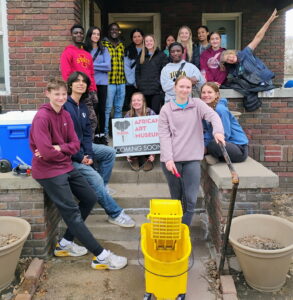
Fourteen students from Hillcrest Academy in Iowa took a five-day Urban Plunge in Omaha, and it changed everything. Led by longtime teacher Bryan, who had been on a Plunge before, the group of freshmen, juniors, and seniors stepped into a whirlwind of service, faith, and transformation.

Jonathan, the Omaha Urban Plunge facilitator, saw a shift happen. “By the end of the trip, they truly became the hands and feet of Jesus—not just to the people they served in Omaha, but to each other,” he said. “I believe they will carry that attitude back to their school and community in Iowa.”

And that shift was real. Talon found joy in serving at Open Arms Food Pantry, not just handing out meals but sitting down, talking, and listening—really listening—to people’s stories.

“When you see their face light up because of food, it makes you feel so good inside.”

Norah stepped out of her comfort zone to share the gospel for the first time, realizing that faith isn’t just about believing—it’s about action.

Gibson felt a new calling: “Before this trip, I would’ve felt bad for a homeless person, but I wouldn’t have done anything. Now, I want to go up to them, see how they’re doing, and pray for them.”

Adrian saw the power of prayer in a whole new way, understanding that hurt is real, but so is hope—and we’re meant to be part of that hope.

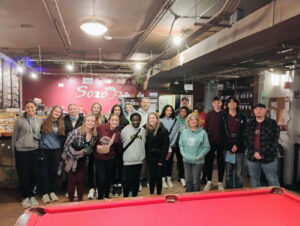
This wasn’t just a trip; it was a launchpad. The students left Omaha determined to bring what they learned home. They’re already making plans—prayer walks downtown, serving at food pantries, stepping into conversations with people they might have overlooked before.

“We make a difference anywhere we go,” Norah said. “God is on our side, and we can do this in our own city.”

The Hillcrest Academy students didn’t just experience change—they became it. And now, they’re taking that fire back to Iowa, ready to live out their faith with boldness, compassion, and action.


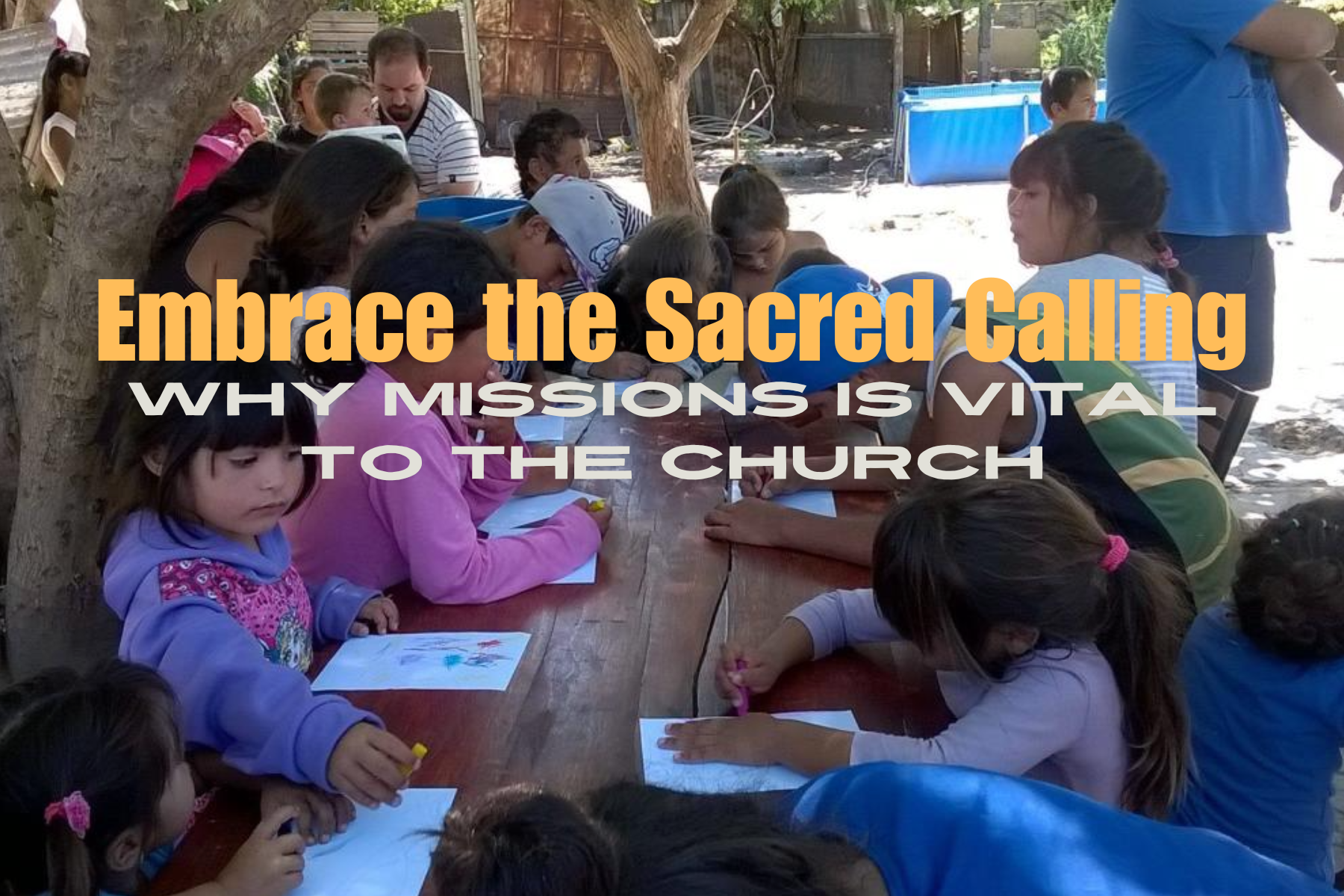
EMBRACING THE SACRED CALLING: WHY MISSIONS IS VITAL TO THE CHURCH

In the grand narrative of the Bible, from the dawn of creation to the culmination of history, the theme of God’s kingdom resounds with resolute clarity. Embedded within this overarching narrative is the sacred calling of the Church – the community of the King – to participate in the divine mission of advancing God’s kingdom on earth. At the heart of this mission lies the imperative of proclamation, embodiment, and demonstration of the sovereign kingship of Jesus Christ. In this exploration, we unveil the profound importance of missions to the Church, rooted in the timeless truths revealed from the book of Acts to the culmination of Revelation.

Understanding the Kingdom Mandate 

From the inception of creation, God’s intention has always been to extend His kingdom from heaven to earth, mirroring the peaceful perfection of the Garden of Eden described in Genesis. This divine mandate finds its fulfillment in the redemptive work of Jesus Christ, who inaugurated the kingdom through His life, death, resurrection, and accession. The Gospels vividly depict Jesus proclaiming the arrival of the kingdom and demonstrating its transformative power through acts of compassion, healing, and deliverance. In Matthew 4:17, Jesus declares, “Repent, for the kingdom of heaven has come near.” Furthermore, in Luke 4:18-19, Jesus quotes Isaiah 61, revealing His mission to proclaim good news to the poor, freedom for the prisoners, recovery of sight for the blind, and to set the oppressed free.

As recipients of this grace, the Church is entrusted with the sacred task of heralding the Gospel of the kingdom to the ends of the earth. The book of Acts chronicles the early believers’ fervent proclamation of the Gospel, resulting in the expansion of the kingdom amidst opposition and persecution. Acts 1:8 records Jesus’ commission to His disciples, “But you will receive power when the Holy Spirit comes on you; and you will be my witnesses in Jerusalem, and in all Judea and Samaria, and to the ends of the earth.” This narrative serves as a timeless reminder of the Church’s calling to be ambassadors of Christ, bearing witness to the reality of His reign amid a broken and fragmented world.

Moreover, the early Church in Acts demonstrated the kingdom’s transformative power by serving one another with selflessness and generosity. Acts 2:44-45 depict the believers sharing everything they had, selling their possessions, and giving to anyone in need. This radical communal living showcased to the world a different way of living, guided by the principles of God’s kingdom.

Proclamation, Embodiment, and Demonstration 

Central to the mission of the Church is the threefold mandate of proclamation, embodiment, and demonstration of the kingdom of God. The Gospels depict Jesus as the embodiment of the kingdom, where He walked, the kingdom manifested itself through acts of love, mercy, and justice. In Matthew 9:35, it is written, “Jesus went through all the towns and villages, teaching in their synagogues, proclaiming the good news of the kingdom and healing every disease and sickness.” Similarly, the Church, as the body of Christ, is called to embody the values of the kingdom – caring for the marginalized, advocating for the oppressed, and extending grace to the brokenhearted.

Moreover, the kingdom of God is demonstrated through the tangible expressions of God’s love and power in the world. This includes feeding the hungry, clothing the naked, healing the sick, and delivering those oppressed by the forces of darkness. In Matthew 25:35-36, Jesus instructs His followers, “For I was hungry and you gave me something to eat, I was thirsty and you gave me something to drink, I was a stranger and you invited me in, I needed clothes and you clothed me, I was sick and you looked after me, I was in prison and you came to visit me.”

Co-Laborers with God 

While the advancement of God’s kingdom ultimately rests in His sovereign hands, He invites the Church to co-labor with Him in this divine endeavor. The New Testament never instructs believers to “build” the kingdom but rather to participate in its unfolding through obedience and faithfulness. In 1 Corinthians 3:9, Paul writes, “For we are co-workers in God’s service; you are God’s field, God’s building.” This entails a radical reorientation of our priorities, where we align ourselves with God’s purposes and seek first His kingdom and righteousness. 

In conclusion, missions is not merely an optional activity of the Church but the very essence of its existence. Rooted in the timeless truths of Scripture, the Church is called to embrace its sacred calling as co-laborers with God in advancing His kingdom on earth. As we proclaim, embody, and demonstrate the reality of God’s reign, may our lives bear witness to the transformative power of the Gospel, inviting others to experience the abundant life found in Jesus Christ. Let us, therefore, rise to the challenge, knowing that the kingdom of God is not a distant future reality but a present reality to be embraced and proclaimed with boldness and conviction. 

PLEASE NOTE: Per IRS guidelines all contributions to Christ for the City International are tax deductible to the full extent permitted by law and made with the understanding that Christ for the City International has complete discretion and control over the use of all donated funds.

Copyright © 2022 Christ For the City International. All Rights Reserved.


Join our Mailing list!

Get all latest news from CFCI


  • contact a Missions director

Call us at 888-526-7551

  • Contact Us
Call us at 402-592-8332
5855 North 90th Street | Omaha, NE 68134