
 Eric Tonjes
I remember once visiting a historic cathedral in New York City. It was a beautiful building, full of art, statuary, and soaring architecture. It felt like a deeply sacred space. Yet as I walked through it, I felt unsettled.
Part of my discomfort came from the commercialization. Hundreds of tourists snapped selfies. Donation boxes seemed to be everywhere. Gaudy bronze penny-press machines flanked the main aisle. It felt a little like Jesus walking through the temple courts.
But at a deeper level, what unsettled me was how little impact the sacred realities that space represented seemed to be having. A few people gathered for Mass, but they kept their heads down and were ushered through gates by security while tourists wandered past. Outside, others lounged or begged for money on the cathedral steps.
Worship was still happening in that place, but it felt strangely disconnected from the world around it. Scripture was read. Psalms were recited. Yet it all seemed to exist apart from the bustling city rather than engaging it.
That image has stayed with me—not because it represented the failure of one parish in Manhattan, but because it reflected a temptation common to Christians of every tradition. We can begin to treat faith as something we gather for rather than something we are sent into. We settle for a faith without mission, a believing without going.
Where does this mindset come from? There are many possible answers, but I believe one of the deepest is a faulty vision of God Himself.
Many people imagine God as ultimately passive. Whether they think of Him as a distant cosmic force, a judge in the sky, or a kindly grandfather figure, they picture Him as largely uninvolved. He sits in heaven, while the primary movement of history is humanity reaching toward Him.
Even churches that affirm God’s activity can subtly fall into this pattern. We speak as though He has done His part and is now waiting for us to do ours. He accomplished salvation through Christ, and now He simply waits while we decide whether to embrace it, proclaim it, or obey it.
Sometimes we even tell the story of Scripture this way. Humanity rebels against God. In His grace, He provides a way back through Jesus. Then He waits on the other side of the chasm while we choose whether to cross the bridge of the cross.
But that is not the story the Bible actually tells.
From the opening chapters of Genesis, God is the One who moves first. Humanity rebels, and immediately God begins pursuing those who have run from Him. We hide, and He comes looking for us.
- When Adam and Eve sin, God seeks them out, clothes their nakedness, and promises a Redeemer who will crush the serpent’s head.
- When the nations are scattered at Babel, God immediately calls Abram and promises that through him all the families of the earth will be blessed.
- When Israel is enslaved in Egypt, God does not merely unlock the prison door. He comes to deliver His people, leading them by a pillar of cloud and fire. He places His own dwelling in the midst of their camp.
- Again and again, when Israel rebels or wanders, God moves toward them. He raises up judges. He establishes kings. He sends prophets to call His people home.
- Then, in Jesus, God literally moves into our neighborhood. Before Christ becomes the way for us to come to God, He is Immanuel—God with us.
- And when the church is formed, believers are sent into the world not to begin God’s work but to join it. God has already prepared a harvest among the nations. He pours out His Spirit, and the earliest Christians continually discover that He has gone before them.
Scripture is, from beginning to end, the story of a missionary God.
He is always moving toward the lost, seeking the wandering, pursuing the broken, planting, watering, preparing, and redeeming. Our calling is not to remain safely inside the house but to go into His fields and gather the harvest He is already growing.
Few truths are more empowering for our missionary calling than this one. We are not trying to persuade a reluctant God to care about the world. We are following a God who is already at work in it. If we want to experience what God is doing, we should certainly gather for worship—but we should also go where He is moving.
That calling touches every part of life. God sends us to our neighbors and coworkers, to the man who collects our trash and the woman who bags our groceries. Wherever people are, God is already pursuing them.
But there is something uniquely encouraging about seeing that same God at work in places far from home. Whether watching lives transformed in prisons, communities served in inner cities, or churches planted among unreached peoples, we are reminded that God’s mission extends to every nation.
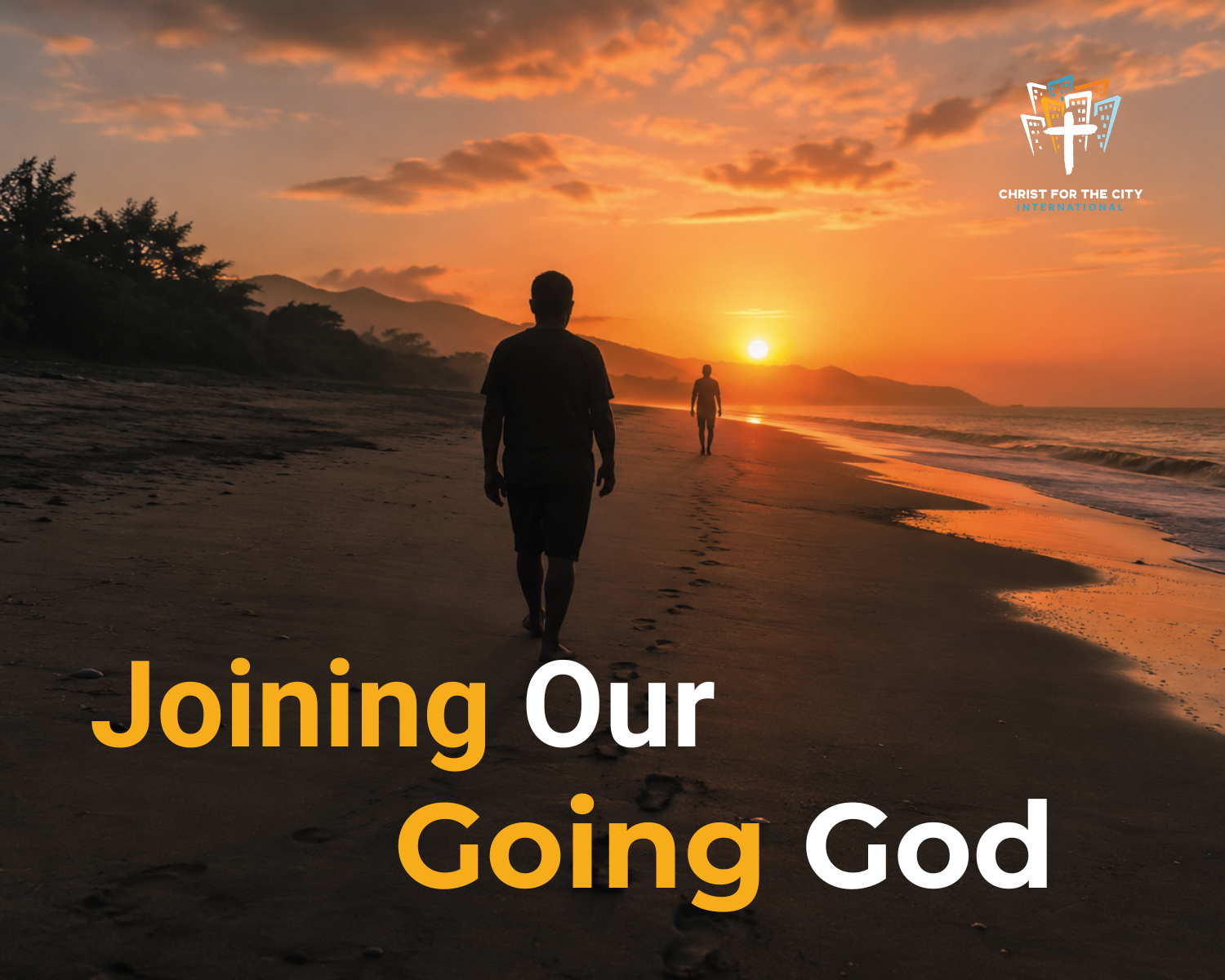
That is our hope at CFCI. We often describe our trips with a simple phrase: Go where God is moving. We don’t believe we are bringing God somewhere He has never been. We believe He is already at work, pursuing people with His love, and we have the privilege of joining Him. That is the invitation of mission—and, ultimately, the story of the Bible itself.
