Every Day Should Be a Mission

What happens when students move beyond the church walls and spend a week serving in a city?

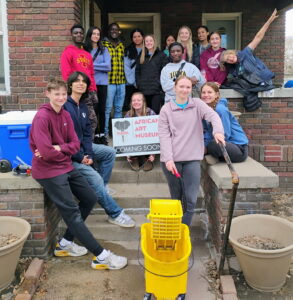
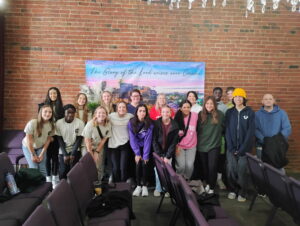
For eight students from Minnesota, an Urban Plunge in Omaha became much more than a mission trip. It became an opportunity to see people differently, understand their communities more deeply, and discover that God’s mission isn’t confined to a church building—or even a single week of service.

By the end of the trip, one student’s biggest takeaway could be summed up in four simple words:

“Every day should be a mission.”

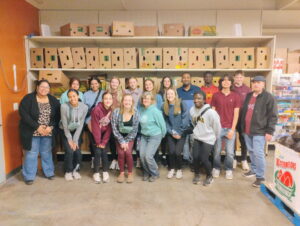
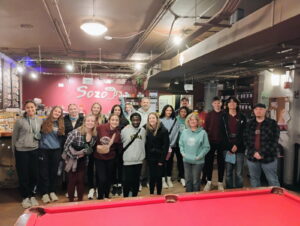
Throughout the week, the team partnered with local ministries, served people experiencing homelessness, met refugees and immigrant families, learned about ministry in diverse communities, and encountered people whose stories challenged their assumptions.

For one student, the most impactful moment happened during a simple game of basketball.

“When one man and I talked for a good while after initiating basketball, it was so impactful to see someone experiencing homelessness being just like me.”

It’s a realization many students experience during Urban Plunge. The people they serve stop being statistics or labels. They become neighbors. Friends. People with stories, struggles, hopes, and dreams.

That shift in perspective often changes more than students expect.

When asked what surprised him most, the student’s answer was simple:

“How many privileges I really have.”

Others discovered a new boldness in their faith.

Leah shared that serving at Heart Ministry Center was one of the most meaningful parts of the week. During her time there, she had the opportunity to pray for a woman in need.

“I felt Jesus embolden me more than I’ve ever been emboldened before during this trip,” she said. “I want to go forward and share the gospel with everyone I meet.”

Leah also recalled hearing from a missionary serving among Muslim communities. Learning about a different culture and hearing firsthand how God is working around the world expanded her understanding of both people and missions.

“Knowing how many people need Jesus, I can’t be afraid to let my light shine.”

For Caitlynn, the week opened her eyes to realities she had never fully understood before.

“I never realized how many people were in poverty, or experiencing homelessness, even how many are in domestically abusive relationships.”

One interaction especially stayed with her.

“I prayed for a couple of people and I could see their faces just light up. One even started crying.”

Moments like these remind students that ministry doesn’t always require a stage, a sermon, or years of experience. Sometimes it begins with a conversation, a prayer, a listening ear, or a willingness to show up and let God work.

The trip also challenged students to grow personally and spiritually. One lesson that resonated throughout the week was, “Be comfortable with being uncomfortable.” Thirteen-year-old Rush pointed to Matthew 28:19—the Great Commission—as a reminder that every follower of Jesus is called to go and make disciples.

What makes Urban Plunge unique is that students don’t just learn about missions. They experience it.

They see firsthand how God is working in cities. They discover the needs and opportunities that exist all around them. They begin to recognize that ministry isn’t reserved for missionaries or pastors. It’s something every believer is invited into.

And often, they return home seeing their own communities differently.

The goal of Urban Plunge has never been simply to create a meaningful week. The goal is to help students develop a lifestyle of mission—one that continues long after the trip ends.

Because the truth is, mission isn’t just something we do when we travel. It’s how we live.

Every day should be a mission.

At Christ For the City International, Urban Plunge helps students discover that reality for themselves. Through hands-on service, intentional discipleship, cultural engagement, and opportunities to share God’s love in practical ways, students begin to see what it means to follow Jesus beyond the church walls.

If you’re a youth pastor, church leader, school teacher, parent, or student looking for more than just another trip, Urban Plunge can help your students encounter God through service and return home ready to live on mission every day.

Ready to help your students see what God can do through a week of intentional service?

Learn more about Urban Plunge and upcoming opportunities at www.cfci.org/go.

Why Do People Come Home from Mission Trips Changed?

If you’ve ever talked with someone after a mission trip, you’ve probably heard them say, “I went there to serve, but I feel like I received more than I gave.”

At first, that sounds backwards.

Mission trips are about serving others, sharing the love of Jesus, and stepping into the needs of a community. Yet time and time again, people come home talking not only about what God did through them, but about what happened within them.

Why is that?

The truth is, God is just as present in Omaha as He is in Guatemala, Zimbabwe, or anywhere else in the world. He isn’t more available on the mission field than He is in our homes, workplaces, churches, or neighborhoods.

But when we step away from our normal routines, something often shifts in us.

The distractions are quieter.
The schedules are different.
The familiar comforts are gone.
And suddenly we’re paying attention in a new way.

We pray with greater expectancy. We notice people more intentionally. We become more aware of opportunities to love, encourage, serve, and share the hope we’ve found in Christ.

It’s not that God suddenly shows up when we board a plane.
It’s that we’re often more aware of the ways He’s been present all along.

Mission trips have a way of reminding us that we were never meant to do life in our own strength. We encounter situations we can’t control, conversations we didn’t plan for, and moments that invite us to trust God more deeply. In those moments, we’re reminded that ministry isn’t about having all the answers, it’s about learning to recognize and respond to what God is already doing.

Many people leave on a mission trip hoping to impact someone else’s life.

And they do.

Relationships are built. People are encouraged. Hope is shared.

But somewhere along the journey, something begins to change in the heart of the person serving.

Our perspective expands.
Our compassion grows.
Our faith deepens.

We begin to see people the way God sees them.

And perhaps most importantly, we discover that God is already at work in far more places than we realized.

The purpose of a mission trip isn’t simply to go somewhere different. It’s an invitation to join God in what He’s already doing and to learn what it looks like to live with greater awareness of His presence.

Maybe that’s why so many people return home changed.

Not because they found God somewhere far away.

But because they became more aware of His nearness, more attentive to His voice, and more willing to say yes to the invitation He has been extending all along.

And the beautiful thing is this: That invitation doesn’t end when the trip is over.

The same God who is at work across the world is at work in your neighborhood, your workplace, your family, and your everyday life.

The mission field may change your perspective, but it also reminds you that every day is an opportunity to partner with God right where you are.

Maybe all that’s needed is a simple yes.

If you’re ready to explore where God might be inviting you next, visit CFCI Go Trips to learn more about upcoming mission opportunities and ways to serve around the world.

Make Lasting Memories with Family Mission Trips

A 12-year-old boy stood in front of a soccer school in El Salvador, gripping his notes with sweaty hands.

Dozens of kids stared back at him.

Moments earlier, they had been laughing, joking, and chasing a soccer ball. Now they were listening closely.

He took a breath and shared a simple message.

“I used to think I had to be perfect for God to love me,” he said. “But I’m learning that He just wants me to keep giving Him my best.”

That was it.

No polished sermon.
No fancy words.

And somehow, every kid there could relate and connect.

“I stood in the back watching him talk to those kids and thought, ‘I would have missed this version of my son if we hadn’t come,’” Lindsay said. “I was watching him step into faith and compassion in a way I hadn’t seen before.”

A few days earlier, Lindsay watched her son teach local teenagers how to play chess.

Somewhere between explaining pawns and bishops, he connected the game to God’s kingdom, how every piece has a purpose and every role matters.

Later that same week, he quietly prayed for a woman inside her tiny home after hearing her share about her sick son.

And through every moment, Lindsay kept coming back to the same thought: I would have missed this version of my son if we hadn’t gone.

That’s the power of families serving together on mission trips.

Yes, communities are impacted.
Yes, churches are encouraged.
Yes, practical needs are met.

But something sacred also happens inside the family itself.

Over the last few years, Christ For the City International has seen more families saying yes to missions together, and the impact reaches far beyond what most people expect.

“The people we serve aren’t only seeing a husband or wife—they’re seeing the entire dynamic of a family,” Josue, one of our missionaries and coordinators in Costa Rica, said.

For many children in the communities we serve, that picture is rare.

Some have never seen a healthy family working together.
Some have never watched parents serve side by side.
Some don’t know what it looks like for a family to laugh together, pray together, and love others together.

So when families arrive on the mission field, it communicates something powerful before a single word is translated.

And children respond in ways that consistently surprise even the adults.

They connect quickly—through soccer, crafts, music, games, and laughter. Language barriers fade as relationships form naturally.

More than observers, children from visiting families often become active participants in ministry.

They pray for others.
They engage with local children.
They serve in practical ways.
And they often step into moments of ministry with a boldness that grows throughout the trip.

In the process, something important happens: They begin to realize that God can use them right now.

Not someday when they are older.
Not once they feel more prepared.
But in the present.

At the same time, parents often witness something just as meaningful—the unfolding of their children’s faith in real time.

Mission trips have a way of removing families from routine and placing them into environments where faith becomes practical.

Moments where a child prays for someone they just met.
Moments where joy is witnessed in places of lack.
Moments where compassion becomes lived experience instead of abstract belief.

These experiences often leave a lasting imprint long after returning home.

And while many assume mission trips require large teams or complex logistics, the reality is far simpler.

Six people is enough to form a team, which means families do not have to wait until everything aligns perfectly.

It might be two families from the same church.
It might be close friends who have talked about serving together.
It might be a small group ready for something deeper.

The invitation is simple: go together.

Serve together.
Experience together.
Grow together.

Because mission trips do more than impact the communities being served.

They shape the families who go.

And often, they shape the next generation in ways that cannot be fully understood until they return home changed.

Ready to bring your family—or another family alongside you—on a mission trip?

Visit cfci.org/go to learn more about upcoming opportunities and how to begin planning together.

June Letter from the President

I’ve seen a pattern over the years in Scripture, in my own life, and through the ministry of CFCI around the world. God often calls us forward before we feel ready. He invites us to trust Him in uncertainty, to take steps of obedience without having all the answers, and to follow Him even when fear is still present. 

We see this lived out every day through our missionaries. They step into unfamiliar places, build relationships across cultures, and engage complex challenges. They don’t do it because it’s easy, but because they believe God has called them. And in that obedience, something deeper happens. They don’t just participate in God’s work; they grow in their understanding of His faithfulness. They discover greater clarity in their purpose and experience a deeper walk with Him. 

This is not just the story of missionaries. It is the invitation extended to every follower of Christ. Each of us faces moments where we must choose between what feels comfortable and what God is asking of us. In those moments, obedience becomes the pathway not only to impact, but to knowing God more fully. 

This message of faithful obedience is one that we’ll be leaning into in a special way this fall at our Fueling Transformation Gala in Omaha on November 10, 2026. We are honored to welcome Kent Chevalier as our featured speaker. As the author of Do It Afraid and chaplain for the Pittsburgh Steelers, Kent brings a powerful combination of personal story and biblical insight, challenging each of us to trust God beyond what feels comfortable and to step forward in faithful obedience.  

It will be an evening not only to celebrate what God is doing through CFCI around the world, but also to be encouraged and equipped in our own walk with Him. I hope you can join us! 

Fundraising Is Ministry (Even If It Doesn’t Feel Like It)

If we’re honest, most of us don’t naturally associate fundraising with something sacred.

It can feel awkward. Transactional. Like we’re asking for something instead of offering something.

But what if that’s not actually what’s happening?

In A Spirituality of Fundraising, Henri J. M. Nouwen gently challenges that tension. He reframes fundraising not as a necessary burden, but as a form of ministry—an invitation into something deeper.

Not a transaction.
A relationship.

Not pressure.
An opportunity.

Not about money.
About participation in God’s work.

An Invitation, Not an Ask

At its core, fundraising is simply this: inviting people to be part of what God is already doing.

It’s easy to think we’re asking someone to give something up.
But in reality, we’re inviting them to step into something eternal.

When we share stories of transformation—lives changed, hope restored, communities renewed—we’re not selling a cause.

We’re opening a door.

And when someone walks through it, they’re not just writing a check.

They’re saying yes to being part of the story God is writing.

Why It Feels So Hard

If fundraising feels uncomfortable, it’s often because we’ve believed something untrue about it.

Maybe we’ve thought:

  • “I’m bothering people.”
  • “They’re going to say no.”
  • “This is about money, not ministry.”

But Nouwen reminds us that these thoughts miss the heart of it.

Fundraising is grounded in the belief that:

  • God is already at work.
  • People want to live with purpose and generosity.
  • We get to connect the two.

That’s not pressure—that’s partnership.

Ministry Happens on Both Sides

One of the most beautiful ideas Nouwen shares is that fundraising doesn’t just bless the ministry—it blesses the giver.

Because giving is never just about the resource.
It’s about transformation.

When someone gives, they’re aligning their heart with what matters most.
They’re choosing faith over fear.
They’re investing in something that lasts.

That’s spiritual formation.

That’s discipleship.

That’s ministry.

And sometimes, this invitation isn’t just something we extend—it’s something we step into ourselves.

For Those Preparing to Go

And sometimes, this invitation isn’t just something we extend—it’s something we step into ourselves.

If you’re getting ready to step onto a Global Team, this might be the part that feels the hardest.

Raising support can feel vulnerable.

You might wonder:

  • What if people say no?
  • What if I don’t raise enough?
  • What if this feels… uncomfortable?

But what if fundraising isn’t standing on the outside, asking people to send you?

What if it’s standing in the middle of what God is doing—and inviting others to come with you?

You’re not asking people to fund a trip.

You’re inviting them to take part in ministry they may never physically step into—but can still be deeply part of.

So We Keep Inviting

At Christ For the City International, we’ve seen this firsthand.

Every trip taken.
Every ministry launched.
Every life impacted.

None of it happens alone.

It happens because people say yes—yes to going, yes to serving, and yes to giving.

So we keep inviting.

Because fundraising was never just about provision.

It’s about participation in the work of God.

Whether you’re called to go or to give, there’s a place for you in this story.

👉 Explore Global Teams
👉 Become a financial partner

What Happens When a Family Says “Yes” to Missions Together?

For Roeland, Anna, and their daughter Diana, missions wasn’t just a personal calling.

It became a shared “yes.”

After participating in several short-term mission trips, the family from the Netherlands began sensing God leading them into something deeper. They wanted to go beyond a brief outreach experience and spend a longer season serving wherever God opened the door.

That journey eventually led them to Zimbabwe through Christ For the City International’s Global Ambassador program.

“We were convinced that we had to go to Zimbabwe,” they shared. “And because of that, we had complete confidence that God would show us what we were supposed to do there.”

What began as online research and conversations with CFCI slowly became confirmation after confirmation that Zimbabwe was where they were meant to go. The doors kept opening. God kept guiding.

And eventually, they stepped through those doors together.

Missions as a Family

For many people, the idea of serving on a mission trip as a family can feel intimidating.

What about the logistics?
What about finances?
What about comfort zones, schedules, or uncertainty?

But for Roeland, Anna, and Diana, serving together became one of the most meaningful parts of the experience.

“It was a wonderful opportunity to serve and to be able to do so together as a family,” they said.

And while Diana is an adult with previous experience doing development work in Africa, their story still reflects something powerful: family mission trips matter at every stage of life.

Families don’t have to look one specific way to serve together.

Sometimes it’s parents and young children.
Sometimes it’s siblings.
Sometimes it’s adult children joining their parents in ministry.
Sometimes it’s an entire church family stepping into missions side by side.

What matters most is simply being willing to say yes together.

Their family even launched a project called Source of Hope, making themselves available for months at a time to bring practical help, encouragement, and hope to people in Zimbabwe.

Learning Patience and Trust

Like many missionaries and short-term teams experience, the beginning wasn’t about jumping immediately into projects and activity.

It was about slowing down.

Listening.
Learning.
Adjusting.

“For Diana, the beginning took some getting used to,” they shared. “There was first a period of discovery and visiting all the projects. Her patience was put to the test.”

But in that waiting, clarity came.

Diana eventually found herself deeply involved at a boys’ orphanage, serving through her background as a social worker and investing personally in the lives of the children there.

For the entire family, one of the greatest lessons God has been teaching them is patience and dependence on Him.

“You want to get started and get to work right away,” they said. “But first we had to take time to settle in and get our bearings.”

They also shared that one of the hardest parts of becoming Global Ambassadors was trusting God financially.

“It was quite a big step to choose something while not having the full finances for it.”

Yet even there, God has continued to provide.

The Moments That Change You

Mission trips are rarely remembered because of itineraries or schedules.

They’re remembered because of people.

For Roeland, one unforgettable moment happened after inviting two boys from an orphanage to a men’s breakfast gathering.

One of the boys later said:
“I feel alive.”

“That really resonated with me,” Roeland shared. “He experienced the Holy Spirit within him, and he can carry that with him despite his circumstances.”

For Anna, it was serving at a ministry called Healing with Horses, where children with physical and intellectual disabilities are given the opportunity to ride horses.

“There was a girl there who was so enthusiastic about being allowed to ride again,” Anna said. “Her eyes sparkled with joy.”

For Diana, one of the most impactful moments came during a home visit in the slums of Bulawayo, where they met a mother raising her four children while also caring for two adopted children — including one child abandoned because of severe disabilities.

“A harrowing situation,” Diana shared, “but also a miraculous choice by a mother who can barely make ends meet in poverty, yet still takes on the care of another person’s child.”

These are the kinds of moments where you don’t just see the needs of the world — you encounter the heart of Jesus in a way that leaves fingerprints on your heart forever.

You Don’t Have to Do Everything Alone

One of the beautiful things their family discovered is that missions together doesn’t mean everyone has to do the exact same thing.

“You don’t have to do everything together,” they explained. “It’s important to let each other play to your strengths.”

That’s true for families.
It’s true for teams.
It’s true for churches.

Every person brings something unique.

Some teach.
Some build relationships.
Some organize.
Some pray.
Some lead worship.
Some encourage.
Some simply show up willing to serve.

And God uses all of it.

A Shared Mission

When asked what they would say to families or teams considering missions together, their answer was simple: “It starts with opening yourself up to the Lord.”

They encouraged people not to wait until they feel perfectly prepared, but to simply begin somewhere — even with a short-term trip.

“It brings you closer together because you have a shared goal and build memories together. It is a unique experience.”

That’s the beauty of missions.

Whether you go as a family, a group of friends, a church team, a youth group, or as an individual joining others on the field, God uses shared experiences to transform hearts.

Not just the people being served.
But the people serving too.

Because sometimes the greatest transformation happens when ordinary people simply make themselves available to God.

And then watch what He does next.

Interested in serving on a mission trip, Urban Plunge, or becoming a Global Ambassador?

Visit www.cfci.org/go to explore opportunities to serve around the world.

“Go for it. You won’t regret it.”

When Josh Fenton from the United Kingdom took a career break, he knew it was time to fulfill a lifelong dream—serving on an extended mission trip. After completing a ministry training program, he joined Christ For the City International as a Global Ambassador and spent several months serving in Zimbabwe.

“There wasn’t really a typical day,” Josh said. “Some days were spent helping with renovations at Emthunzini Wethemba, other days with children at Isaiah’s Home, or in rural and street ministry. Every day was an opportunity to grow.”

One of his favorite moments came on his final day—a bonfire night with the boys at the children’s home. “We cooked, laughed, sang around the fire, and celebrated everything we’d done together. It was the perfect ending.”

Josh says the experience changed him deeply. “My biggest takeaway was the power of unconditional love—how we can be vessels for God to show that to a stranger.”

From mentoring youth to praying with Evans, a young man who started a chicken business after being paralyzed in an accident, Josh saw firsthand how God brings hope in the hardest places.

For anyone considering becoming a Global Ambassador, Josh says:

It’s one thing to read about the life of love that Jesus led—but it’s another thing to live it every day. Go for it. You won’t regret it.

Josh discovered that unconditional love can change a life—and you can too.
Whether you’re ready to serve on a Global Team, lead a group, join an Urban Plunge, or take your next step in missions, there’s a place for you to go.

Explore opportunities to live the Gospel in action → www.cfci.org/go

Your Church was Made for Mission: 5 Ways to Partner with Christ For the City International

At Christ For the City International, we believe the Church was never meant to stay inside four walls. From the very beginning, God called His people to live on mission—loving their neighbors, serving their communities, and bringing the hope of Jesus to the nations.

Churches play a vital role in that mission.

Whether your congregation is passionate about going, giving, praying, or mobilizing others, there are meaningful ways to partner with what God is doing through CFCI around the world.

Here are five simple ways your church can be part of the story.


1. Go on a Mission Trip

One of the most powerful ways a church can engage in missions is by going together.

Mission trips allow youth groups, college ministries, young adults, small groups, families, and entire congregations to step outside their normal rhythms and serve alongside local ministries around the world.

Through Urban Plunge trips in U.S. cities and Global Teams serving internationally, churches can:

• Share the Gospel
• Serve practical needs in communities
• Encourage and support local leaders
• Grow in faith and unity as a team

There’s something powerful about taking what God is doing inside the church walls and living it out together in the world.


2. Give to the Mission

Missions move forward because of faithful generosity.

When churches give to the vision of Christ For the City International, they help sustain ministry happening every day in cities and communities across the globe.

Your giving fuels discipleship, leadership development, outreach, and compassionate service through our international bases.

Our vision remains bold:

No place without a witness.
No church without a vision.
No person without hope.

And we continue to believe God is inviting us to help create environments where 1 million lives can be forever changed through the ministry of CFCI.

When your church gives, you’re investing in transformation that reaches far beyond what any one team or trip could accomplish.

Become a financial partner!


3. Pray for the Mission

Prayer is one of the most powerful ways your church can partner in missions.

Across the world, CFCI teams are serving communities, discipling believers, and sharing the hope of Jesus in places that often require courage, perseverance, and faith.

Your prayers provide encouragement, protection, and spiritual covering for missionaries, national leaders, and the people they serve.

Consider setting aside time to pray for:

• CFCI missionaries and global staff
• The communities being served
• Open hearts to the Gospel
• Future leaders being raised up

When the Church prays, God moves.


4. Mobilize Your People

Sometimes the greatest impact a church can have is simply inviting people into the mission.

You can help mobilize others by:

• Sharing mission trip opportunities with your congregation
• Encouraging students and young adults to explore serving abroad
• Highlighting stories of transformation from the field
• Creating moments where missions becomes part of the conversation

Many people feel called to serve—but they just need someone to point them toward the opportunity.

Your church could be the place where that calling begins.


5. Build a Long-Term Partnership

Missions are most powerful when relationships grow over time.

Some churches choose to partner more deeply with CFCI by building an ongoing relationship with one of our ministry bases or returning regularly to serve in the same location.

Over time, these partnerships allow churches to:

• Encourage and support local leaders
• See long-term impact in communities
• Send teams year after year
• Watch God work in powerful ways

What begins as a single trip can grow into a lasting Kingdom partnership.


The Invitation

The mission of God is bigger than any one church or organization. But when we work together, the impact multiplies.

Whether your church chooses to go, give, pray, mobilize, or partner, you have a role to play in bringing the hope of Jesus to cities and communities around the world.

And together, we believe it’s possible to see 1 million lives forever changed.

Ready to explore the next step for your church?

Visit cfci.org/go to learn more about mission opportunities.

8 Ways to Build a Strong, Healthy Mission Team Before You Leave

Great mission trips don’t just happen on the field.

They’re built in living rooms. Around tables. In prayer circles. In honest conversations before anyone ever boards a plane.

If you want a powerful outreach experience, build a strong team first.

Here are 8 practical ways to do that.

1. Meet Regularly Before the Trip

Don’t let your first real connection happen on travel day.

Gather consistently in the weeks (or months) before you leave. Shared rhythms build trust. And trust builds unity.


2. Pray — Individually and Together

Pray for:

  • Each other’s families

  • Spiritual protection

  • Open doors

  • Local leaders you’ll serve with

  • Soft hearts

Prayer turns a group of individuals into a spiritual family.


3. Share Your Full Story

Take time for each team member to share their journey with Jesus — the long version.

Not the polished version. The real one.

Where did God meet you?
Where did you wrestle?
Where are you still growing?

Vulnerability builds connection faster than small talk ever will.


4. Prepare a 2-Minute Version of Your Story

Now shrink it.

Everyone should practice sharing their faith story clearly and naturally in two minutes or less — like an elevator conversation.

Better yet? Go practice.

As a team, spend one meeting going out locally to:

  • Start conversations

  • Share your story

  • Offer to pray for people

Practice here what you hope to do there.


5. Set Healthy Expectations

Expect God to move.

But don’t expect:

  • Constant emotional highs

  • Perfect team chemistry

  • A flawless schedule

A strong team decides ahead of time:

  • We will assume the best in each other.

  • We will address conflict quickly.

  • We will choose encouragement.

Unity doesn’t happen accidentally. It’s chosen.


6. Do the Research Together

Divide up topics and have each team member present:

  • Cultural norms and etiquette

  • Religion and spiritual landscape

  • History and political context

  • Economic realities

  • Key phrases in the local language

  • Traditional food and clothing

  • The history of the church in that region

When everyone contributes, everyone invests.


7. Fundraise as a Team

Don’t just fundraise — build momentum.

Host:

  • A car wash

  • A dessert or coffee night

  • A worship or art night

  • A “parents’ night out” childcare event

Fundraising together builds unity and gives supporters a chance to be part of the mission.


8. Decide Now Who You Want to Be

Before you leave, ask:

What kind of teammate do I want to be?

  • Quick to listen

  • Quick to forgive

  • Quick to serve

  • Quick to encourage

The way you show up for each other will shape the entire trip.


Ready to Build Something Bigger?

Mission trips aren’t about checking a box. They’re about living sent — wherever God places you.

If you’re ready to take your group, youth ministry, small group, or church into a deeper, hands-on experience of the Great Commission, explore Urban Plunges and Global Teams at:

👉 cfci.org/go

Because strong teams don’t just change cities.

They come home changed.

New Culture, Same God

“Do nothing from selfish ambition or conceit, but in humility count others more significant than yourselves. Let each of you look not only to his own interests, but also to the interests of others.”
— Philippians 2:3–4

You’re headed somewhere new!

A new city. A new country. New food. New rhythms. New faces.

But stepping into another culture doesn’t just expand your passport stamps. It stretches your heart—in all the best ways.

Whether it’s the pace of life, how people greet one another, how meals are shared, or how time is viewed, you’re about to experience the beauty of doing life differently.

And here’s the good news:
New culture. Same God.


What Is Culture, Really?

Culture is how a group of people lives, thinks, works, eats, laughs—and worships.

Some parts of culture are obvious. Others are so deeply woven into daily life that you don’t even notice them… until you leave your own bubble.

God created culture. All of it. The diversity, the languages, the traditions, the expressions of worship. When we approach culture with curiosity instead of comparison, we get to see His creativity up close.

Before you go, take time to learn about the community you’ll be serving.
The more you understand, the more you’ll connect.

Look for similarities.
Learn from the differences.


Expect the Unexpected (Especially with Time)

In some places, life revolves around the clock. In others, it revolves around people.

You may discover that schedules are more flexible than you’re used to. Meetings may start later. Conversations may last longer. Plans may shift.

That’s not dysfunction—it’s a different priority system.

Pro Tip: Show up with a flexible heart. Relationships often come first.


“Me” vs. “We”

Your home culture might celebrate independence:
“I’ve got this.”

The culture you’re stepping into might emphasize interdependence:
“We’ve got this.”

Teamwork may look different. Leadership may look different. Even decision-making may feel unfamiliar.

Pro Tip: Celebrate the team. Honor the group. You’re not there to be the hero—you’re there to serve.


Plans Change. God Doesn’t.

Let’s be honest: overseas schedules can feel more like suggestions.

You might have a full day planned—and then, suddenly, everything shifts.

Instead of frustration, what if you saw flexibility as formation?

Every pivot is an opportunity to trust.

Pro Tip: Pray through the changes. God is not surprised by the detour.


Control: Internal or External?

Some cultures believe, “I make things happen.”
Others live with, “Life happens—and we adapt.”

As you serve, resist the urge to fix everything you see.

You are not the savior. Jesus already is.

Pro Tip: Pause. Pray. Partner with the Holy Spirit before you act.


A Big Picture Reminder

The goal isn’t to bring your way of life.
The goal is to bring love, humility, and the hope of Jesus—in a way that honors the culture around you.

When you lead with humility, curiosity, and respect, you reflect Christ beautifully.

And remember:
The same God who meets you at home is already at work in the place you’re going.

New language.
New food.
New rhythms.

Same God.


If you’re preparing for an Urban Plunge or Global Team, take time now to posture your heart. The way you show up matters just as much as what you do.

Ready to step into a new culture with confidence and humility?

Explore upcoming trips at cfci.org/go 🌍

PLEASE NOTE: Per IRS guidelines all contributions to Christ for the City International are tax deductible to the full extent permitted by law and made with the understanding that Christ for the City International has complete discretion and control over the use of all donated funds.

Copyright © 2022 Christ For the City International. All Rights Reserved.


Join our Mailing list!

Get all latest news from CFCI


  • contact a Missions director

Call us at 888-526-7551

  • Contact Us
Call us at 402-592-8332
5855 North 90th Street | Omaha, NE 68134